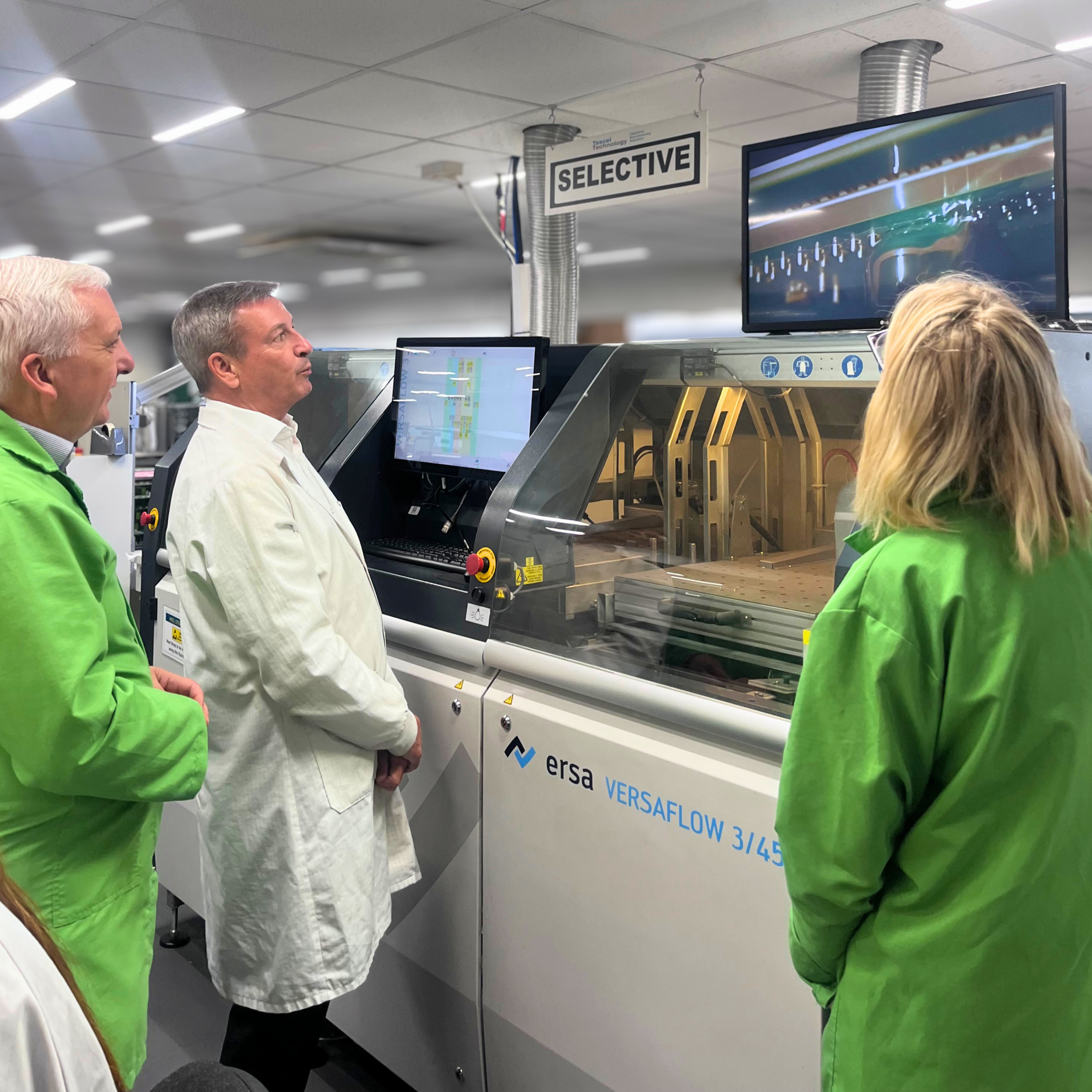


Fifty years in the making. Local MP Daniel Francis visited Texcel's Crayford facility for a first-hand look at the state of UK electronics manufacturing, right as the company celebrates its 50th anniversary.
Texcel Technology has designed, engineered and manufactured complex electronics in Britain since 1976 and if there's one thing five decades in the industry teaches you, it's that great manufacturing isn't just about machines. It's about skilled people, resilient supply chains, constant investment and a willingness to think long term.
From Parliament to the Production Line
Daniel was shown round by our Managing Director Andy McLeod, later joined by fellow directors Sarah McNamara Sales Director and Finance Director Luke Vincett, for a tour that gave him a genuine first-hand look at what modern British electronics manufacturing involves.
Andy walked Daniel through the sheer range of what gets made under one roof on any given day. On the tour alone, products in production included components for ship satellite systems, specialist x-ray equipment, RF technology, braking systems for rail, and products bound for the tourism sector, a snapshot of just how varied Texcel's customer base really is. Daniel also saw the scale of investment behind it all, with millions of pounds sunk into high-tech machinery over the years and heard how Texcel's production lines are built to flex between low-volume specialist runs and much larger production batches.
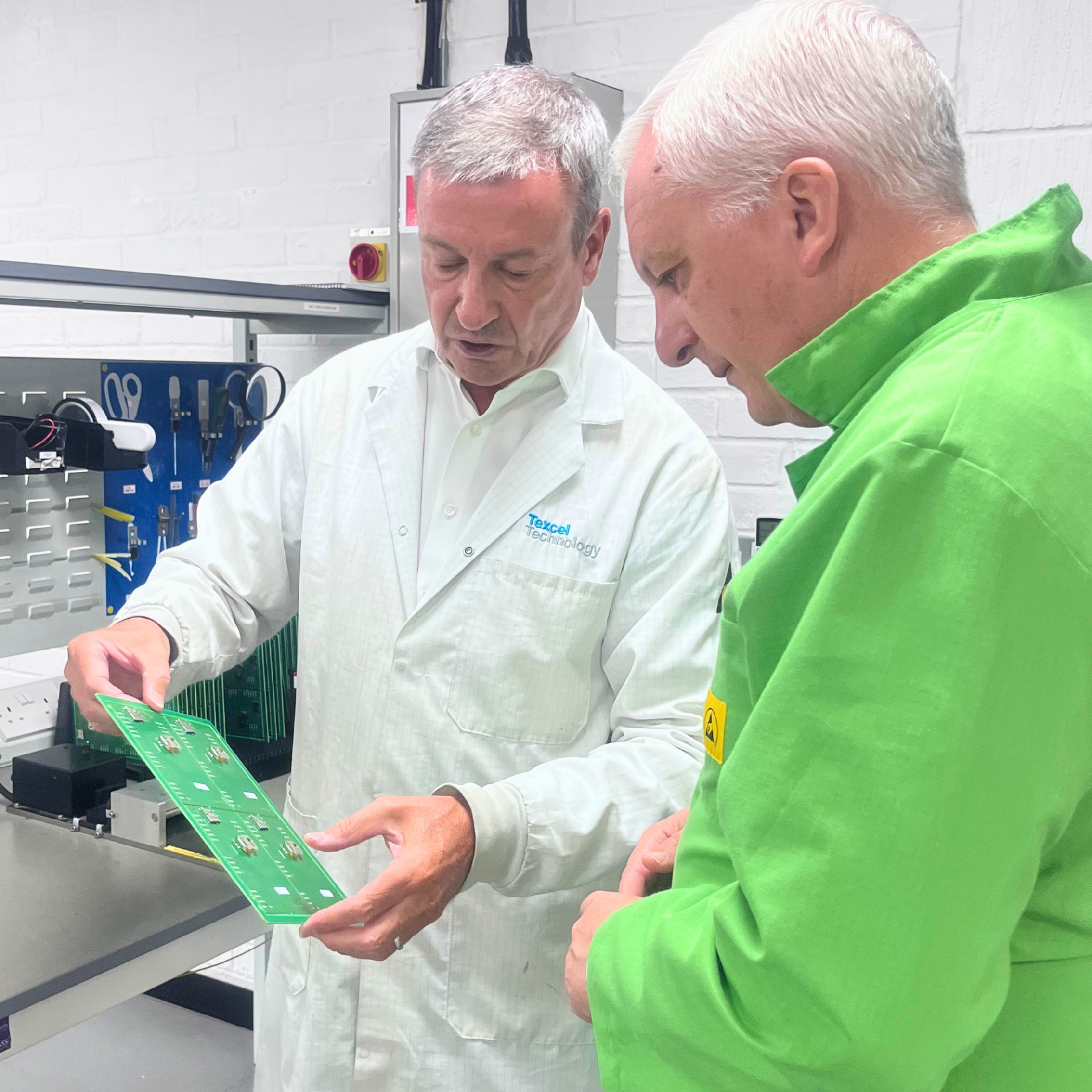
Along the way, from component traceability and AI-assisted inspection to high-voltage testing and complex box-build assembly, Andy showed how a customer design becomes a finished product through highly controlled processes and rigorous quality checks, each stage reflecting the precision needed for products that operate in critical environments around the world.
A Piece of Parliamentary History
One of the visit's highlights was a story that tends to surprise people. Texcel designed and manufactured the upgraded electronic division bell detection system used within the Palace of Westminster. They worked alongside the Whitechapel Bell Factory on the original build with cords were rewound and bases handmade from wood. One particularly memorable was the Morris Minor gear stick at Black Rods chair, upgraded with sensors as part of the mechanism to push one way to call the Commons and the other way to call Lords. The system was built to give MPs reliable notice when votes were called, even catching instances where external bells in nearby pubs and bars had been switched off and might otherwise have caused a missed vote. It's the kind of project that sums Texcel up rather well. Not always visible to the public but quietly engineering the systems people rely on every day.
Talking Supply Chains: A Sector Under Pressure
A good chunk of the conversation focused on the realities of sourcing components in 2026 and it's fair to say the last few years have tested every manufacturer's resilience.
Raw material costs have climbed sharply, driven by disruption to petrochemical and lamination supply chains and rising copper prices with global events having played a large part their part affecting the industry. COVID-19 left its own mark, with some components becoming entirely unavailable for extended periods. The rise of electric vehicles has added another layer of complexity, pushing component manufacturers to shrink parts for high-volume automotive production and forcing many of our customers into redesigns. More recently, the boom in AI data centres has placed enormous strain on memory chip availability, with entire supply runs snapped up before they reach the wider market.
It is a landscape that demands careful forward planning, strong supplier relationships and a good deal of patience, three things Texcel has built up over fifty years in business.
Skills, Apprenticeships and the Next Generation
The discussion also turned to something close to Texcel's heart: how the UK trains its future engineers. Electronics manufacturing apprenticeships have thinned out considerably since Texcel's own directors came through the trade and the conversation touched on a much needed boost in apprenticeship and the rollout of T Levels, which might help rebuild the pipeline of skilled talent the sector badly needs.
At Texcel, we've long taken the view that attitude is our key employment criteria. We recruit people from all kinds of backgrounds and industries looking for people who bring the right work ethic and attention to detail, we can then teach them the skills through our internal training programmes. It's an approach that has served us well, but it doesn't replace the need for a stronger national pipeline of engineering apprentices, something we raised directly with Daniel.
Celebrating 50 Years, Looking to the Next 50
The timing of the visit couldn't be more fitting, landing right in the middle of Texcel's 50th anniversary year. The company was founded by three engineers who set out with an ambitious goal to design the world's most advanced ship loading computer. Since then Texcel has grown into one of the UK's leading independent electronics manufacturing specialists, supporting customers across medical, transport, energy, telecommunications, subsea and industrial technology sectors, with the majority of products ultimately exported around the world.
A lot has changed in fifty years what hasn't changed is the philosophy: invest in technology, develop talented people and take on the difficult engineering problems.
Thank You for Visiting
Our thanks to Daniel Francis MP for taking the time to visit Texcel and for his genuine interest in the realities, achievements and ambitions of British manufacturing. Fifty years on, we're just as passionate about engineering as we were on day one and just as committed to flying the flag for UK manufacturing through whatever comes next.
Here's to the next fifty years.